UK Recognises Cryptocurrency as Personal Property
Discover how the UK’s new law treating cryptocurrency as personal property transforms investor rights, regulation and the future of digital assets.

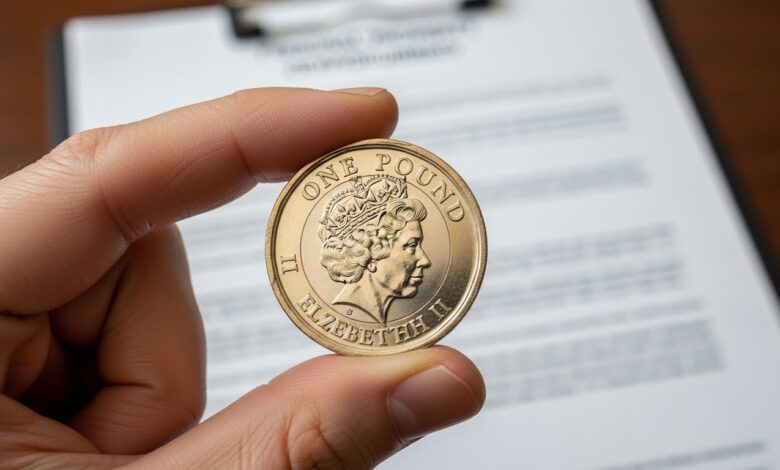
The United Kingdom has taken a landmark step by formally recognising cryptocurrency as personal property in law. This shift goes beyond regulatory guidance or court decisions: it is now written into statute that digital assets, including crypto-tokens and stablecoins, can be treated as a distinct form of property under English and Welsh law. The move follows years of legal debate, influential court rulings and detailed work by the Law Commission on digital assets, culminating in the Property (Digital Assets etc) Act 2025, which received Royal Assent on 2 December 2025.
By explicitly recognising cryptoassets as property, the UK has put itself among the first major jurisdictions to create a clear, statutory framework for ownership of blockchain-based assets. For investors, exchanges, custodians, and developers building in the crypto and Web3 ecosystem, this means greater legal certainty, stronger enforcement tools against fraud, and a more solid foundation for mainstream adoption.
In this article, we will explore what it means for cryptocurrency to be treated as personal property, how the UK reached this point, the impact on investors and businesses, and what this development could mean for the future of crypto regulation in the UK and beyond.
How did the UK get here? A brief legal timeline
Early recognition: UKJT and landmark court cases
The UK’s journey towards recognising cryptocurrency as personal property began well before the 2025 Act. In 2019, the UK Jurisdiction Taskforce (UKJT) published a groundbreaking legal statement on cryptoassets and smart contracts. It concluded that cryptocurrencies are capable of being treated as property under English law. This statement, chaired by Sir Geoffrey Vos, was widely seen as a “watershed moment” because it showed how common law could adapt to new technology.
Shortly afterwards, the English High Court in the case of AA v Persons Unknown [2019] followed the UKJT’s analysis and held that Bitcoin could be treated as property. This allowed the court to issue a proprietary injunction over Bitcoin that had been paid as a ransom, confirming that cryptoassets can be frozen and recovered like other assets.
These decisions effectively recognised crypto as property in practice, but only on a case-by-case basis. There was still no single, clear digital asset law laying down the rules in statute.
The Law Commission and the case for reform
To remove the remaining uncertainty, the government asked the Law Commission of England and Wales to review how private law should deal with digital assets. In June 2023, the Law Commission published its final report on digital assets, recommending that a new statutory category of personal property be created specifically for digital assets.
In a supplemental report and draft Bill published in July 2024, the Commission set out in more detail how this new category should work, arguing that it would provide a “strong foundation for the development and adoption of digital assets” and help keep English law at the forefront of global innovation.
From Bill to Act: the Property (Digital Assets etc) legislation
The Bill progressed through Parliament and, after further scrutiny and debate, received Royal Assent on 2 December 2025, becoming the Property (Digital Assets etc) Act 2025. Reports from the Law Commission and specialist legal commentators confirm that the Act creates a third category of personal property for digital assets such as cryptocurrencies, stablecoins, NFTs and carbon credits.
Why this matters: stronger rights and clearer rules for crypto holders
Legal certainty for investors and traders
By treating cryptocurrency as personal property, the UK gives investors a clearer legal route to recover assets and enforce their rights.
A boost for exchanges, custodians and fintech firms
The recognition of cryptoassets as personal property is equally important for businesses operating in the digital asset ecosystem. Exchanges, custodians, brokers, payment platforms and tokenisation projects can now structure their services around clearer legal concepts.
For example, custodians can document their relationships with clients using familiar property and trust law concepts, distinguishing between assets held on trust and those held on the custodian’s own balance sheet.
Fintech firms also benefit from increased confidence among institutional investors, who often require robust legal opinion on property rights before committing large amounts of capital to crypto and tokenised assets.
How does this affect tax, inheritance and everyday use?
Tax treatment
The Property (Digital Assets etc) Act 2025 does not itself create a new tax regime for digital assets, but it supports and complements the UK’s existing tax approach to cryptocurrency. HM Revenue & Customs (HMRC) has already treated most individual dealings in cryptocurrency as a form of investment subject to capital gains tax, while certain activities such as trading or mining may be subject to income tax. Recognising cryptocurrency as personal property aligns the legal classification with this tax approach, making it easier to fit crypto transactions into existing tax frameworks.
Inheritance and estate planning
One of the most practical impacts of recognising cryptocurrency as personal property is in inheritance and estate planning.
The new Act clarifies that qualifying digital assets can be owned and therefore passed on to heirs. Combined with best practices such as secure storage of seed phrases, multi-signature arrangements and professional advice, this recognition makes it far easier for families and wealth planners to incorporate digital wealth into long-term plans.
Everyday use and consumer protection
It becomes simpler for courts to consider claims involving mis-selling, misrepresentation or breach of contract where the underlying asset is a cryptocurrency or stablecoin. Over time, this should support a healthier and more trustworthy market, in which bad actors find it harder to hide behind supposed legal gaps.
The UK versus the world: is it really among the first?
Many jurisdictions have taken steps to regulate digital assets, but not all have gone as far as creating a dedicated statutory category of personal property for them. Some treat crypto mainly through securities law or financial regulation; others rely heavily on case law or do not expressly address the issue at all.
By passing the Property (Digital Assets etc) Act 2025, the UK has become one of the first major common-law jurisdictions to formally recognise a unique property category for cryptoassets. The Law Commission and legislative materials emphasise that this keeps English and Welsh law at the forefront of global digital asset development, signalling a deliberate strategy to make the UK a competitive hub for digital finance and blockchain innovation.
This does not mean that other countries are far behind. Jurisdictions such as Singapore, parts of the United States and certain European states have their own frameworks that, in effect, treat crypto as property or as assets capable of ownership. However, the UK’s new Act stands out for the way it integrates digital assets into centuries-old property law while still allowing courts to develop the details of this third category over time.
Remaining grey areas and future developments
Not all digital assets are equal
Interaction with regulation and policy
The recognition of cryptocurrency as personal property interacts with, but does not replace, broader crypto regulation in the UK. The government and regulators such as the Financial Conduct Authority (FCA) continue to work on rules governing promotion of crypto, anti-money laundering requirements, stablecoin regulation and consumer protection.
At the same time, ministers have signalled concerns about specific uses of cryptocurrency, such as political donations, where anonymity and foreign influence pose particular risks. This shows that even as the UK strengthens property rights for digital assets, it is still wrestling with how to manage broader social and political impacts of the crypto economy.
A foundation, not the final word
It provides essential clarity on ownership and property rights, but leaves many details for the courts and regulators to work out in the coming years.
As more disputes involving blockchain-based assets reach the courts, judges will test the boundaries of this third category of property, and further legislation may refine how digital assets interact with insolvency, security interests, consumer protection and cross-border enforcement.
What this means if you hold or use cryptocurrency
For anyone holding or dealing with cryptocurrency in the UK, the recognition of digital assets as personal property has several key implications. Your coins or tokens now sit on a clearer legal footing. If you are the rightful owner, you have stronger tools to protect your holdings, both through private arrangements (such as clear contracts with custodians) and through public mechanisms (such as injunctions and court orders).
This does not remove market risk or volatility. You can still lose money if the value of a cryptoasset falls, and you still need to take care with private keys, wallet security and due diligence on service providers.
For businesses, the UK’s move may make it more attractive to base crypto and Web3 operations in England and Wales, particularly for projects seeking legal opinions on property rights or looking to structure complex institutional deals. Over time, this could contribute to the UK’s ambition of becoming a leading global hub for digital assets and fintech innovation.
Conclusion
By formally recognising cryptocurrency as personal property, the UK has taken a historic step that brings digital assets fully into the mainstream of its legal system. After years of incremental change through the UKJT legal statement, cases like AA v Persons Unknown and the Law Commission’s detailed analysis, the Property (Digital Assets etc) Act 2025 now gives crypto a clear home within English and Welsh property law.
This statutory recognition creates greater legal certainty for investors, traders, exchanges, custodians and innovators. It strengthens the tools available to courts to combat fraud, resolve disputes and protect victims. It also provides a coherent framework for digital wealth, helping integrate crypto holdings into tax systems, inheritance planning and everyday commercial activity.
The new law does not answer every question. Courts and regulators will continue to refine how digital assets fit into existing legal and regulatory structures. But the direction of travel is clear: in the UK, cryptocurrency is no longer an awkward legal outsider. It is property. And that simple recognition could prove transformative for the future of the crypto economy.
FAQs
Q. Does the new UK law mean cryptocurrency is legal tender?
No. Recognising cryptocurrency as personal property does not make it legal tender in the UK.
Q. How does this affect me if I store my crypto on an exchange?
If you keep your coins or tokens on a centralised exchange or with a custodian, the recognition of cryptoassets as property strengthens your position if something goes wrong. In cases of fraud, hacking or insolvency, courts can treat your digital assets as property that may be subject to proprietary claims or injunctions, rather than as something legally ambiguous. However, your rights will still depend on the terms and conditions you agreed with the exchange, so it remains important to read and understand those documents.
Q. Does this change how my cryptocurrency is taxed in the UK?
The Act itself does not overhaul tax rules, but it supports the existing approach taken by HMRC. Most individuals holding cryptocurrency as an investment are already subject to capital gains tax on their profits, while professional trading, mining or staking may give rise to income tax.
Q. Are NFTs and other digital tokens covered by the new law?
Yes, many non-fungible tokens (NFTs) and similar digital tokens are intended to fall within the new third category of personal property created for digital assets.
Q. Is the UK really one of the first countries to do this?
The UK is not the only country to treat cryptocurrency as property, but it is among the first major common-law jurisdictions to create a dedicated statutory framework that recognises a new property category specifically for digital assets. Other states have relied more on case law, financial regulation or piecemeal rules. By passing the Property (Digital Assets etc) Act 2025, the UK has taken a particularly clear and deliberate step that many observers see as a model for future digital asset legislation elsewhere.