Coinbase and PNC Partner for Direct Bitcoin Access
Discover how Coinbase and PNC's partnership expands direct Bitcoin access for banking clients through innovative cryptocurrency solutions.

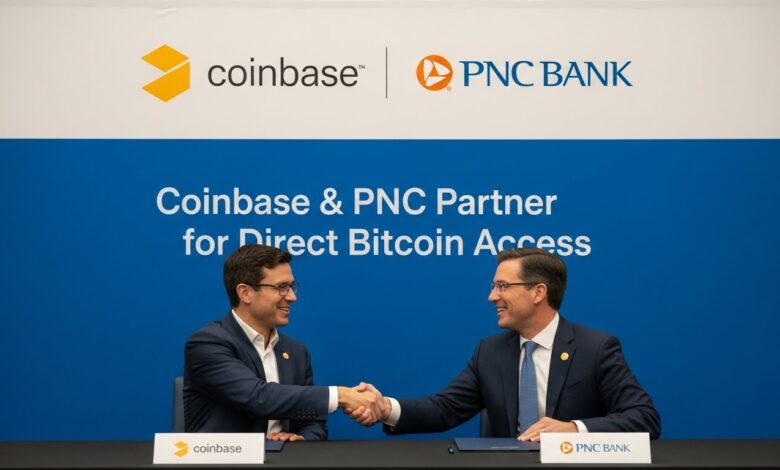
Coinbase PNC Bitcoin Access has become a reality through a strategic partnership that promises to reshape how millions of Americans interact with cryptocurrency. This collaboration between one of the nation’s largest cryptocurrency exchanges and a major regional bank represents more than just a business arrangement—it symbolizes the financial industry’s recognition that digital currencies are here to stay.
The partnership between Coinbase and PNC marks a pivotal moment in financial history where traditional banking infrastructure meets cutting-edge blockchain technology. For years, cryptocurrency enthusiasts and everyday investors have faced significant barriers when attempting to seamlessly integrate their digital asset holdings with traditional banking services. This alliance directly addresses those pain points by offering direct Bitcoin access for clients through trusted banking channels that millions already rely on for their daily financial needs.
Coinbase and PNC Partnership
The strategic alliance between these two financial powerhouses represents a carefully orchestrated effort to democratize cryptocurrency access while maintaining the regulatory compliance and security standards that banking customers expect. Coinbase, as the largest publicly traded cryptocurrency exchange in the United States, brings technical expertise, regulatory experience, and a proven track record of facilitating billions in digital asset transactions. Meanwhile, PNC Bank, with its extensive network of branches across 27 states and a customer base exceeding 9 million retail customers, provides the traditional banking infrastructure and trust that mainstream consumers demand.
This Coinbase PNC Bitcoin Access initiative goes beyond simple account linking. The partnership enables PNC customers to directly purchase, hold, and manage Bitcoin through integrated banking platforms without needing to navigate the often intimidating world of cryptocurrency exchanges independently. By embedding cryptocurrency functionality directly into familiar banking interfaces, this collaboration removes technical barriers that have previously prevented mass adoption among traditional banking customers who may be curious about digital assets but hesitant to venture into unfamiliar territory.
The timing of this partnership reflects broader market trends where institutional adoption of cryptocurrency has accelerated dramatically. Major corporations, hedge funds, and pension funds have allocated significant portions of their portfolios to Bitcoin and other digital assets. However, retail customers—particularly those who prefer the stability and familiarity of traditional banking relationships—have often felt left behind in this financial revolution. The PNC Bitcoin partnership directly addresses this gap by bringing cryptocurrency services into the mainstream banking ecosystem.
Benefits of the Coinbase PNC Bitcoin Partnership
The advantages of this Coinbase and PNC partnership extend far beyond simple convenience, touching on fundamental aspects of financial inclusion, innovation, and customer empowerment. For PNC customers who have been cryptocurrency-curious but hesitant, this partnership provides a trusted entry point into the digital asset ecosystem. The familiar banking interface, combined with PNC’s established reputation for customer service, significantly lowers the psychological barriers that have prevented many traditional banking customers from exploring cryptocurrency investments.
From a practical standpoint, the integration of Bitcoin access into existing banking infrastructure eliminates many of the logistical headaches that plague cryptocurrency investors. Traditional cryptocurrency enthusiasts often juggle multiple accounts across various exchanges, wallets, and banking platforms, creating complex workflows for moving money between traditional and digital finance. The PNC Bitcoin integration consolidates these functions, allowing customers to manage their entire financial portfolio—including both traditional assets and cryptocurrency holdings—from a single, unified platform.
The partnership also addresses regulatory and compliance concerns that have historically complicated cryptocurrency adoption. PNC’s involvement brings established KYC protocols, anti-money laundering safeguards, and regulatory oversight that satisfy both federal banking requirements and cryptocurrency regulations. For customers, this means less paperwork, faster account approval, and confidence that their transactions comply with applicable laws. For the broader cryptocurrency industry, partnerships like this demonstrate that digital assets can coexist with traditional financial regulations without sacrificing the innovation that makes blockchain technology revolutionary.
Tax reporting represents another significant benefit of the Coinbase PNC Bitcoin Access arrangement. Cryptocurrency transactions create complex tax reporting obligations, and many investors struggle to accurately calculate gains, losses, and taxable events across multiple platforms. By consolidating cryptocurrency activity within the PNC banking ecosystem, customers receive integrated tax documentation that simplifies year-end reporting and reduces the likelihood of errors that could trigger audits or penalties.
Impact on Cryptocurrency Adoption and Market Dynamics
The broader implications of this Coinbase and PNC partnership ripple throughout both the cryptocurrency industry and traditional banking sector. When major financial institutions embrace digital assets, they send powerful signals to regulators, other banks, and consumers about the legitimacy and permanence of cryptocurrency in the modern financial landscape. This particular alliance could serve as a blueprint for similar partnerships, potentially triggering a cascade of collaborations between cryptocurrency platforms and traditional banks.
Market analysts predict that direct Bitcoin access for clients through mainstream banking channels could significantly accelerate cryptocurrency adoption rates. Previous cryptocurrency adoption cycles have been driven primarily by technologically savvy early adopters and institutional investors. However, partnerships that embed cryptocurrency functionality into everyday banking experiences tap into a vastly larger demographic—the millions of Americans who maintain traditional banking relationships but have never seriously considered cryptocurrency investment due to perceived complexity or risk.
The PNC Bitcoin integration also influences cryptocurrency market dynamics by introducing new capital flows and investor behavior patterns. Traditional banking customers tend to have different risk profiles, investment timelines, and trading behaviors compared to typical cryptocurrency exchange users. This demographic typically favors longer-term holdings, smaller but more consistent investments, and less speculative trading—all factors that could contribute to market stability and reduced volatility over time.
Competition among financial institutions will likely intensify as a result of this partnership. Banks that fail to offer cryptocurrency services risk losing customers, particularly younger demographics who view digital asset access as an expected feature of modern banking rather than an exotic addition. This competitive pressure should accelerate innovation, improve customer offerings, and drive down costs associated with cryptocurrency transactions as more institutions enter the space and vie for market share.
Regulatory Landscape and Compliance Considerations
The Coinbase PNC Bitcoin Access partnership operates within a complex and evolving regulatory framework that governs both traditional banking and cryptocurrency operations. Understanding this regulatory landscape provides crucial context for why this partnership represents such a significant milestone. Banking regulators, including the Office of the Comptroller of the Currency, the Federal Reserve, and the FDIC, have gradually developed guidance addressing cryptocurrency activities by federally chartered banks.
PNC’s decision to offer Bitcoin access to clients required extensive coordination with regulatory authorities to ensure full compliance with banking laws, securities regulations, and cryptocurrency-specific rules. This regulatory groundwork benefits the entire industry by establishing precedents and clarifying gray areas that have previously deterred banks from engaging with cryptocurrency. The partnership demonstrates that financial institutions can offer cryptocurrency services while maintaining the safety, soundness, and consumer protection standards that banking regulators demand.
Consumer protection represents a paramount consideration in this regulatory framework. The Coinbase and PNC partnership incorporates multiple layers of protection, including clear disclosure of risks associated with cryptocurrency investment, transparency regarding fees and costs, and robust complaint resolution mechanisms. Unlike unregulated cryptocurrency platforms that have occasionally failed spectacularly, leaving customers without recourse, this partnership operates under banking regulatory oversight that provides customers with established channels for addressing disputes and concerns.
The evolving nature of cryptocurrency regulation means that partnerships like this must remain adaptable. Legislative proposals at both federal and state levels continue to shape the rules governing digital assets, custody requirements, taxation, and securities classification. The PNC Bitcoin integration benefits from both institutions’ substantial regulatory compliance resources, enabling them to quickly adapt to changing requirements while maintaining uninterrupted service for customers.
Technical Infrastructure Behind the Partnership
The technological backbone supporting Coinbase PNC Bitcoin Access represents a sophisticated blend of banking infrastructure, blockchain technology, and cybersecurity measures. Coinbase provides the cryptocurrency exchange functionality, wallet services, and blockchain integration, while PNC contributes its proven banking platforms, customer databases, and security protocols. These systems must communicate seamlessly while maintaining the security and reliability that customers demand from financial services.
Application Programming Interfaces serve as the connective tissue linking PNC’s banking systems with Coinbase’s cryptocurrency infrastructure. These APIs enable real-time data exchange, transaction processing, and account synchronization while maintaining strict security protocols that prevent unauthorized access or data breaches. The direct Bitcoin access functionality feels instantaneous to users, but behind the scenes, complex verification processes, security checks, and compliance screenings occur within milliseconds to ensure every transaction meets regulatory requirements and security standards.
Cryptocurrency custody—the secure storage of digital assets—represents one of the most critical technical challenges addressed by this partnership. Coinbase employs industry-leading custody solutions that combine cold storage for the majority of assets with hot wallets for immediate liquidity needs. This approach balances security with functionality, ensuring that PNC clients can quickly execute transactions when desired while keeping the bulk of cryptocurrency holdings protected from cyber threats in offline storage that hackers cannot access remotely.
The scalability of this technical infrastructure determines the partnership’s long-term viability. As more PNC customers adopt cryptocurrency services, the underlying systems must handle increased transaction volumes without degradation in performance or security. Both Coinbase and PNC have invested heavily in cloud infrastructure, load balancing, and redundancy measures that ensure reliable service even during periods of high demand or market volatility when cryptocurrency trading activity typically surges.
Customer Experience and User Interface Design
The success of Coinbase PNC Bitcoin Access ultimately depends on delivering an exceptional customer experience that feels intuitive and trustworthy. User interface designers faced the challenge of integrating cryptocurrency functionality into existing PNC banking platforms without overwhelming customers with excessive complexity or unfamiliar terminology. The resulting design philosophy emphasizes simplicity, clarity, and progressive disclosure—revealing advanced features only to users who explicitly seek them while keeping the basic experience straightforward for newcomers.
The mobile banking application represents the primary interface through which most customers interact with their Bitcoin access. The design team incorporated cryptocurrency features using familiar banking metaphors and visual patterns that customers already understand from managing traditional accounts. Bitcoin balances appear alongside checking and savings accounts, transactions follow similar formatting and organization, and the overall navigation structure maintains consistency with established PNC mobile banking conventions.
Educational content is seamlessly integrated throughout the user experience, providing contextual help and explanations without requiring customers to leave the banking application to search for information. When a customer first explores cryptocurrency options, they encounter brief, clear explanations of key concepts, risk disclosures, and guided tutorials that walk through the process of making their first Bitcoin purchase. This educational scaffolding builds customer confidence while ensuring informed decision-making about cryptocurrency investments.
Customer support channels have been specifically adapted to address cryptocurrency-related inquiries. PNC representatives receive specialized training on blockchain basics, Coinbase platform features, and common customer questions about digital assets. This ensures that customers can receive assistance through their preferred channels—whether phone, chat, email, or in-person at branches—without being redirected to external cryptocurrency support resources that might undermine the integrated experience the partnership aims to provide.
Future Implications and Expansion Possibilities
The Coinbase and PNC partnership represents just the beginning of what could become a comprehensive digital asset ecosystem within traditional banking. Both institutions have signaled intentions to expand beyond Bitcoin, potentially incorporating additional cryptocurrencies, blockchain-based services, and decentralized finance functionality as regulatory frameworks develop and customer demand evolves. The initial focus on Bitcoin access provides a foundation upon which more sophisticated cryptocurrency services can be built.
Potential future expansions might include Ethereum access, stablecoin integration for everyday transactions, cryptocurrency-backed lending products, or even participation in decentralized finance protocols through curated, risk-managed offerings. Each addition would require careful regulatory consideration, technical integration, and customer education, but the infrastructure established through this partnership creates pathways for these innovations to reach mainstream banking customers.
The partnership model itself could expand geographically and institutionally. PNC operates primarily in the eastern United States, but the success of this initiative could inspire similar collaborations with regional banks in other parts of the country, gradually creating a nationwide network of traditional financial institutions offering direct Bitcoin access for clients. Such expansion would significantly accelerate cryptocurrency adoption by making digital assets available through locally trusted banking relationships across diverse communities.
International implications also deserve consideration. As United States financial institutions demonstrate that cryptocurrency services can be offered safely within regulated banking frameworks, international banks may feel empowered to pursue similar strategies. This could contribute to global cryptocurrency adoption, increased market liquidity, and continued evolution of regulatory standards as different jurisdictions observe and learn from the American experience with bank-integrated digital asset services.
Conclusion
The partnership between Coinbase and PNC represents a watershed moment in the convergence of traditional finance and cryptocurrency innovation. By providing direct Bitcoin access for clients through trusted banking channels, this collaboration addresses longstanding barriers to mainstream cryptocurrency adoption while maintaining the security, regulatory compliance, and customer service standards that define modern banking. As digital assets continue their transformation from speculative investments to legitimate components of diversified portfolios, partnerships like this ensure that everyday banking customers can participate in this financial evolution without sacrificing the familiarity and protection of traditional banking relationships.
The success of Coinbase PNC Bitcoin Access will ultimately be measured not just in transaction volumes or customer adoption rates, but in its ability to fundamentally reshape public perception of cryptocurrency as an accessible, secure, and practical financial tool. For PNC customers curious about exploring digital assets, this partnership offers an ideal entry point supported by institutional backing, regulatory oversight, and comprehensive customer support.
Are you ready to explore cryptocurrency investment through the security of your trusted banking relationship? Contact PNC today to learn how you can take advantage of Coinbase PNC Bitcoin Access and position yourself at the forefront of the financial revolution. The future of finance is here, and it’s more accessible than ever through this groundbreaking partnership that brings Bitcoin to your banking platform.
See more;Crypto Exchange Volume Slumps To $1.6T In November