Bitcoin and Ether ETFs Outflows Before Christmas Hit IBIT, ETHE
Bitcoin and ether ETFs outflows surge before Christmas as IBIT and ETHE lead withdrawals. Discover what's driving crypto ETF redemptions in 2026.

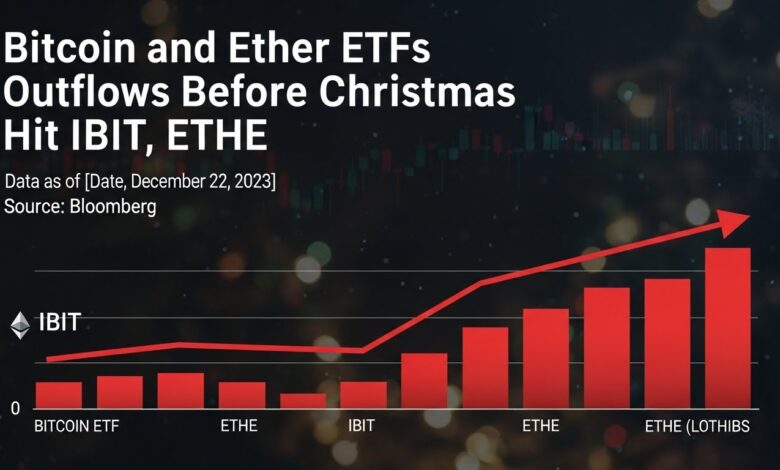
Bitcoin and Ether ETF outflows dominated market activity in the days leading up to Christmas 2024. Investors pulled substantial capital from leading exchange-traded funds, with BlackRock’s IBIT and Grayscale’s ETHE experiencing the most pronounced redemptions. This wave of withdrawals marks a notable shift in sentiment within the digital asset space, raising questions about investor confidence and year-end portfolio rebalancing strategies. The Bitcoin and Ether ETFs outflows phenomenon reflects broader market dynamics as institutional and retail investors alike reassess their cryptocurrency allocations amid evolving market conditions and regulatory developments.
Recent Bitcoin and Ether ETFs Outflows Trend
The cryptocurrency ETF market has matured significantly since the approval of spot Bitcoin ETFs in early 2024, fundamentally transforming how investors access digital assets. However, the recent surge in Bitcoin and Ether ETF outflows represents one of the most significant withdrawal periods since these investment vehicles launched. Market analysts have identified several contributing factors driving this exodus, ranging from profit-taking after substantial year-to-date gains to strategic tax-loss harvesting before the calendar year concludes.
Spot Bitcoin ETF redemptions have captured particular attention, given the remarkable success these products achieved throughout most of 2024. BlackRock’s iShares Bitcoin Trust, trading under the ticker IBIT, had consistently ranked among the top performers in terms of net inflows since its January launch. The fund accumulated billions in assets under management, becoming one of the most successful ETF launches in financial history. Yet even this powerhouse could not escape the pre-holiday withdrawal wave that swept through cryptocurrency investment products.
The timing of these cryptocurrency ETF withdrawals aligns with historical patterns observed in traditional financial markets, where December frequently witnesses increased volatility and rebalancing activity. Investors often liquidate positions to realize gains or losses for tax purposes, crystallize profits after strong performance periods, or simply reduce exposure ahead of lower-liquidity holiday trading sessions. The cryptocurrency market, despite its 24/7 trading nature, has increasingly exhibited behavior patterns similar to traditional asset classes as institutional participation expands.
Why IBIT Led Bitcoin ETF Outflows Before Christmas
Several factors contributed to the substantial IBIT outflows observed before the holiday. First, the fund’s enormous asset base made it a natural target for large-scale portfolio rebalancing. Institutional investors managing diversified portfolios often adjust their allocations quarterly or annually, and IBIT’s liquidity and tight spreads made it an efficient vehicle for reducing cryptocurrency exposure. Second, Bitcoin’s price appreciation throughout 2024 meant that many IBIT holders were sitting on substantial unrealized gains, creating both profit-taking opportunities and potential tax considerations.
The BlackRock Bitcoin ETF withdrawals also reflected broader market sentiment shifts as Bitcoin’s price consolidated after reaching new all-time highs earlier in the year. Technical analysts noted that the cryptocurrency had entered a period of sideways trading, prompting some momentum-focused investors to rotate into other assets with stronger near-term catalysts. Additionally, the approach of the Federal Reserve’s final policy meeting of 2024 created uncertainty around interest rate trajectories, affecting risk appetite across all speculative assets, including cryptocurrency investment products.
Market structure factors also played a role in the Bitcoin ETF redemptions. Authorized participants who create and redeem ETF shares may have adjusted their positions to manage inventory levels heading into a period of potentially reduced trading volumes. The mechanics of ETF creation and redemption can sometimes amplify flows in either direction, particularly around year-end when liquidity conditions shift and market participants take time off.
ETHE and Ethereum ETF Market Dynamics
While Bitcoin products captured headlines, Ethereum ETF flows told an equally compelling story with Grayscale’s ETHE experiencing pronounced outflows. The Grayscale Ethereum Trust had a more complex history than its Bitcoin counterparts, having operated as a closed-end fund before converting to an ETF structure. This conversion process itself had created structural dynamics that influenced subsequent flow patterns and investor behavior throughout the year.
ETHE redemptions accelerated in the pre-Christmas period as investors grappled with Ethereum’s underperformance relative to Bitcoin during the fourth quarter. While Bitcoin reached new highs and captured mainstream attention, Ethereum’s price action remained more subdued, failing to generate the same level of excitement or momentum. This divergence in performance naturally led some investors to reduce Ethereum exposure in favor of Bitcoin or other alternatives, manifesting in the cryptocurrency ETF withdrawals data.
The Grayscale Ethereum Trust also faced unique competitive pressures that contributed to its outflow challenges. Unlike the Bitcoin ETF market where multiple products competed more evenly, the Ethereum ETF landscape saw less balanced competition. Grayscale’s higher fee structure compared to newer entrants created a natural incentive for cost-conscious investors to switch to lower-fee alternatives when reducing or maintaining Ethereum exposure. This fee arbitrage dynamic had been gradually eroding ETHE’s market share throughout the year, with the pre-holiday period accelerating this trend.
Ether ETF market dynamics also reflected concerns about Ethereum’s network development and competitive positioning. The blockchain’s transition to proof-of-stake had been completed, and while this represented a significant technical achievement, some investors questioned whether Ethereum could maintain its dominance amid growing competition from newer blockchain platforms. These fundamental considerations influenced allocation decisions, particularly among sophisticated investors conducting year-end portfolio reviews.
Analyzing Cryptocurrency ETF Withdrawal Patterns
The pattern of Bitcoin and Ether ETF outflows observed before Christmas provides valuable insights into cryptocurrency investment behavior and market maturation. Digital asset ETFs have introduced traditional finance mechanisms and investor behaviors into the cryptocurrency space, creating correlations and patterns that didn’t exist when crypto trading was confined to native exchanges. Understanding these withdrawal patterns helps illuminate how institutional and retail investors approach cryptocurrency exposure within broader portfolio contexts.
Crypto investment funds have historically experienced higher volatility in flows compared to traditional asset ETFs, reflecting both the underlying asset volatility and the newer, less established nature of these investment vehicles. However, the pre-Christmas 2024 outflows demonstrated increasing sophistication in how investors use these products. Rather than panic-driven redemptions, the withdrawals appeared more strategic and tactical, suggesting that cryptocurrency ETFs have achieved a level of market acceptance where they function as legitimate portfolio management tools.
The magnitude of cryptocurrency ETF withdrawals also revealed the substantial capital that had flowed into these products throughout the year. For outflows to reach meaningful levels, inflows must have been even more substantial during accumulation phases. This speaks to the success of spot cryptocurrency ETFs in democratizing access to digital assets and attracting capital that might not have entered the space through traditional cryptocurrency exchanges or custody solutions.
Year-end digital asset ETF flows have established what may become a recurring seasonal pattern in cryptocurrency markets. Just as traditional equities and bonds exhibit calendar effects and tax-motivated trading, cryptocurrency products now demonstrate similar behaviors as they integrate more fully into conventional investment frameworks. This normalization represents both an opportunity and a challenge for the cryptocurrency industry as it seeks to balance mainstream adoption with the innovative, disruptive ethos that originally defined the space.
Market Impact of Pre-Holiday Crypto ETF Redemptions
The wave of Bitcoin and ether ETFs outflows exerted measurable influence on cryptocurrency prices and trading dynamics during the pre-Christmas period. While cryptocurrency markets trade continuously without traditional market hours, the concentration of redemption activity during specific timeframes created observable price pressure and volatility patterns. Understanding this market impact provides context for both the immediate price action and longer-term implications for cryptocurrency market structure.
Spot Bitcoin ETF redemptions translated into actual Bitcoin sales in underlying markets as authorized participants and fund managers adjusted holdings to match reduced shares outstanding. This selling pressure contributed to price consolidation and increased volatility during periods when trading volumes were already declining due to holiday schedules. The interaction between ETF flows and spot market dynamics demonstrated how these investment vehicles have become significant price-setting mechanisms in cryptocurrency markets.
The correlation between Bitcoin ETF redemptions and price movements has strengthened throughout 2024 as these products grew to represent a meaningful percentage of total market capitalization and daily trading volume. When billions of dollars flow out of ETF structures within compressed timeframes, the impact reverberates across all cryptocurrency markets, affecting not just Bitcoin and Ethereum but also alternative cryptocurrencies and related derivative products. This interconnectedness reflects the maturing market structure that has developed around cryptocurrency assets.
Ethereum ETF flows demonstrated somewhat different dynamics given the smaller overall size of Ethereum ETF assets compared to Bitcoin products. While ETHE experienced significant outflows, the total dollar magnitude remained smaller than IBIT withdrawals, resulting in proportionally different market impacts. However, Ethereum’s lower market liquidity relative to Bitcoin meant that even smaller redemption volumes could generate meaningful price movements and trading volatility.
Investor Sentiment and Cryptocurrency Market Outlook
The Bitcoin and Ether ETFs outflows phenomenon provides a window into evolving investor sentiment toward cryptocurrency assets as 2024 drew to a close. Market participants exhibited a complex mix of attitudes, balancing impressive year-to-date returns against uncertainty about near-term catalysts and macro-economic conditions. This nuanced sentiment landscape helps explain why substantial outflows could occur even as longer-term conviction in cryptocurrency’s future remained relatively intact among many investors.
Cryptocurrency investment strategies have diversified considerably as ETF products matured and institutional participation expanded. Some investors view digital asset ETFs as tactical trading vehicles, adjusting exposure frequently based on technical signals or market momentum. Others maintain strategic long-term positions but still engage in periodic rebalancing or profit-taking. The pre-Christmas outflows likely represented a combination of both approaches, with different investor cohorts acting on different motivations and timeframes.
Professional asset managers who allocate to crypto investment funds face distinct considerations around year-end positioning. Portfolio managers must demonstrate prudent risk management to clients and stakeholders, which sometimes means reducing exposure to volatile assets heading into new calendar years, regardless of medium-term conviction. Additionally, performance measurement periods often align with calendar years, creating incentives to lock in gains and avoid potential drawdowns that could affect annual return figures.
The sustainability of cryptocurrency ETF flows into 2025 will depend on multiple factors, including regulatory developments, technological adoption, macro-economic conditions, and Bitcoin and Ethereum network fundamentals. While the pre-Christmas Bitcoin and Ether ETF outflows created near-term headwinds, they also potentially cleared the market of weaker hands and positioned products for fresh capital inflows as new investors allocate funds in the new year.
Comparing Bitcoin and Ethereum ETF Performance Trajectories
The divergent paths of Bitcoin versus Ethereum ETF products throughout 2024 illuminated important differences in how investors perceive and value these two leading cryptocurrency assets. Bitcoin and Ether ETFs outflows followed somewhat different patterns, with Bitcoin products generally maintaining stronger net inflow positions despite the pre-Christmas redemptions, while Ethereum products struggled more consistently throughout the year.
Spot Bitcoin ETF redemptions were notable primarily because they represented a departure from the dominant inflow trend that had characterized most of the year. Bitcoin ETFs collectively attracted tens of billions in net new assets throughout 2024, establishing these products as among the most successful ETF launches in history. The pre-Christmas outflows, while significant in absolute terms, represented only a modest percentage of total assets under management and did not fundamentally alter the success narrative of Bitcoin ETF products.
In contrast, Ethereum ETF flows presented a more challenging picture throughout the year. While spot Ethereum ETFs launched with considerable fanfare and initial enthusiasm, they never achieved the same level of sustained inflows that Bitcoin products enjoyed. Various factors contributed to this disparity, including Ethereum’s more complex value proposition, concerns about regulatory treatment of staking rewards, and Bitcoin’s more established brand recognition among traditional investors new to cryptocurrency.
The performance gap between BlackRock Bitcoin ETF products and Grayscale Ethereum Trust reflected not only the underlying asset performance but also competitive dynamics, fee structures, and market positioning. BlackRock leveraged its massive distribution network and brand credibility to dominate the Bitcoin ETF market share, while Grayscale’s Ethereum product faced challenges from its legacy structure and higher fee burden. These product-level differences compounded asset-level performance divergences to create meaningfully different investor experiences.
Tax Considerations Driving Year-End Cryptocurrency ETF Flows
Tax planning emerged as a significant driver of Bitcoin and Ether ETF outflows during the pre-Christmas period, reflecting the growing sophistication of cryptocurrency investors and their advisors. Cryptocurrency ETF withdrawals motivated by tax considerations follow well-established patterns from traditional securities markets, where December frequently sees elevated trading activity as investors harvest losses or realize gains based on their individual tax situations.
Investors holding spot Bitcoin ETF shares with substantial unrealized gains faced decisions about whether to crystallize those profits before year-end or defer taxation into future periods. For some, taking profits in 2024 made sense based on expectations about future tax rates, anticipated income in 2025, or simply a desire to secure gains after impressive performance. These tax-motivated sales contributed to the overall outflow numbers even when underlying investment conviction remained positive.
Conversely, investors experiencing losses in certain cryptocurrency positions, particularly Ethereum ETF flows that had disappointed relative to expectations, could harvest those losses to offset gains elsewhere in their portfolios. This tax-loss harvesting strategy is particularly valuable for high-net-worth individuals and institutional investors with diversified holdings across multiple asset classes. The ability to recognize cryptocurrency losses through regulated ETF structures rather than dealing with the more complex tax reporting requirements of direct cryptocurrency ownership added to the appeal of this strategy.
The timing of ETHE redemptions and other cryptocurrency ETF outflows in the final weeks of December reflected the deadline-driven nature of tax planning. Investors needed to execute transactions before December 31st for them to count toward 2024 tax returns, creating a natural concentration of tax-motivated activity. Financial advisors working with clients on year-end planning contributed to this flow pattern as they helped optimize tax outcomes across entire portfolios.
Institutional Versus Retail Investor Behavior in Crypto ETFs
The composition of Bitcoin and Ether ETF outflows revealed interesting differences between institutional and retail investor behavior during the pre-Christmas period. Digital asset ETFs attract both investor types, but their motivations, time horizons, and decision-making processes differ substantially, creating distinct flow patterns that collectively shape overall redemption trends.
Institutional investors managing billions in assets approach cryptocurrency investment with systematic processes and governance frameworks that influence the timing and magnitude of position changes. Many institutions conduct formal portfolio reviews quarterly or annually, making December a natural time for rebalancing regardless of short-term market views. The IBIT outflows likely included significant institutional redemptions driven by these procedural requirements rather than fundamental conviction changes about Bitcoin’s long-term prospects.
Crypto investment funds and family offices represent another category of sophisticated investors whose behavior influenced year-end flows. These entities often operate with longer time horizons than traditional institutional investors but still engage in tactical adjustments based on market conditions and opportunity assessment. Some may have reduced cryptocurrency ETF exposure heading into year-end to preserve capital during historically lower-liquidity holiday periods, planning to reestablish positions in January when market conditions normalize.
Retail investors exhibited different patterns in their approach to Bitcoin and Ether ETF outflows. Individual investors often respond more directly to recent price action and news flow, with less formal rebalancing discipline than institutional counterparts. However, retail investors have also demonstrated growing sophistication in using ETF products, with many implementing dollar-cost averaging strategies or maintaining core positions through volatility. The pre-Christmas period likely saw a mix of retail profit-taking after strong gains and some panic-driven selling from less-experienced investors concerned about holiday volatility.
Future Outlook for Cryptocurrency ETF Markets
Looking beyond the immediate pre-Christmas Bitcoin and Ether ETF outflows, the trajectory for cryptocurrency ETF markets remains fundamentally positive despite near-term volatility in flows. The successful launch and growth of spot Bitcoin ETF products throughout 2024 validated the demand for regulated cryptocurrency investment vehicles and demonstrated that traditional financial infrastructure could effectively support digital asset products at scale.
Bitcoin ETF redemptions during specific periods should be viewed within the context of overall market development rather than as harbingers of fundamental problems. All ETF products experience flows in both directions, and the ability to efficiently enter and exit positions represents a feature rather than a flaw of these investment vehicles. The liquidity and transparency that enable redemptions also attract long-term capital by reducing liquidity risk and operational complexity.
The Ethereum ETF flows situation presents both challenges and opportunities heading into 2025. While Ethereum products have underperformed their Bitcoin counterparts, this creates potential for catch-up performance if Ethereum’s fundamental value proposition gains greater recognition among traditional investors. Network upgrades, increasing transaction volumes, and growing real-world applications could shift sentiment and attract fresh capital to Ether ETF market products. Additionally, the resolution of regulatory uncertainty around staking rewards could unlock additional value for Ethereum ETF holders.
Cryptocurrency ETF withdrawals may establish seasonal patterns that become predictable over time, similar to the “January effect” and other calendar anomalies observed in traditional markets. If year-end outflows become a recurring pattern, sophisticated investors could potentially position to take advantage of temporary price pressure, while ETF issuers and authorized participants will develop more refined strategies for managing these periodic redemption waves. This market maturation process will ultimately benefit all participants by improving efficiency and reducing volatility.
Conclusion
The Bitcoin and Ether ETF outflows witnessed before Christmas 2024 represent a natural evolution in the cryptocurrency investment landscape rather than a fundamental repudiation of digital assets’ value proposition. As spot Bitcoin ETF products and Ethereum counterparts become more deeply integrated into traditional financial markets, they will inevitably exhibit the same flow patterns, seasonal effects, and investor behaviors that characterize established asset classes.
Understanding the drivers behind cryptocurrency ETF withdrawals—including tax planning, portfolio rebalancing, profit-taking, and tactical positioning—enables investors to interpret these flows correctly and avoid overreacting to short-term trends. The success of products like IBIT and the challenges facing ETHE provide valuable lessons about market dynamics, competitive positioning, and investor preferences that will shape the next generation of cryptocurrency investment products.
For investors considering exposure to digital asset ETFs, the key takeaway is that volatility in flows should be expected and planned for rather than feared. The ability to efficiently adjust cryptocurrency allocations through regulated ETF structures represents a significant advantage over direct ownership for many investors, even if it means experiencing periodic redemption waves during times of market uncertainty or seasonal rebalancing.
Are you ready to navigate the evolving landscape of Bitcoin and Ether ETF outflows with confidence? Stay informed about cryptocurrency market developments, understand the factors driving ETF flows, and maintain a long-term strategic perspective that looks beyond short-term volatility. Whether you’re an institutional investor managing billions or an individual building wealth through cryptocurrency exposure, understanding these market dynamics is essential for success in the digital asset era.
See more: Bitcoin Drops Toward $86,000: Crypto Market Analysis